Mathematics
At Caldecote Primary School, we believe that every child can succeed in mathematics. Through our mastery approach, we develop confident, resilient and successful mathematicians who understand mathematical concepts deeply and can apply their learning in a range of contexts. Our curriculum is carefully structured using the White Rose Maths scheme, ensuring learning is ambitious, coherent and accessible for all pupils.
Teaching for Mastery
Mathematics is taught through carefully sequenced small steps that build on prior learning and enable pupils to develop secure understanding before moving on. We believe that mastering maths means acquiring a deep, long-term, adaptable understanding of mathematical concepts rather than simply memorising procedures.
Knowledge organisers support pupils in developing and retaining key vocabulary, mathematical concepts and methods, helping them make meaningful connections within and across different areas of mathematics.
Building Fluency and Understanding
A strong foundation in number is at the heart of our curriculum. Through the Mastering Number programme, pupils participate in short, focused sessions several times each week, allowing key knowledge and skills to be revisited regularly. This continual practice develops fluency, strengthens recall and helps children apply knowledge accurately and efficiently.
Once fluency is secure, pupils are challenged to think more deeply through reasoning and problem-solving activities. They learn to explain their thinking, justify their methods, identify patterns and apply their understanding to unfamiliar situations.
Daily Mathematics Lessons
In our daily maths lessons, all children work towards the same carefully planned learning objective, with support and challenge provided through the depth of learning rather than acceleration to new content.
Lessons follow an I Do, We Do, You Do structure:
- I Do – the teacher explicitly models new concepts and strategies.
- We Do – pupils practise together with guidance and support.
- You Do – pupils apply their learning independently.
Teachers and teaching assistants continually assess understanding throughout lessons, providing immediate feedback, addressing misconceptions and adapting teaching where required. Low-threshold, high-ceiling tasks ensure that all pupils can access learning while providing opportunities for deeper thinking.
Mathematical discussion is a key feature of our lessons. Pupils are encouraged to use precise mathematical vocabulary, compare strategies, explain their reasoning and justify their conclusions. Through this emphasis on oracy, children become increasingly confident and articulate mathematical thinkers.
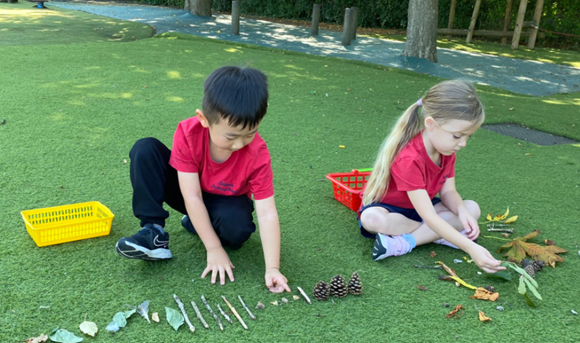
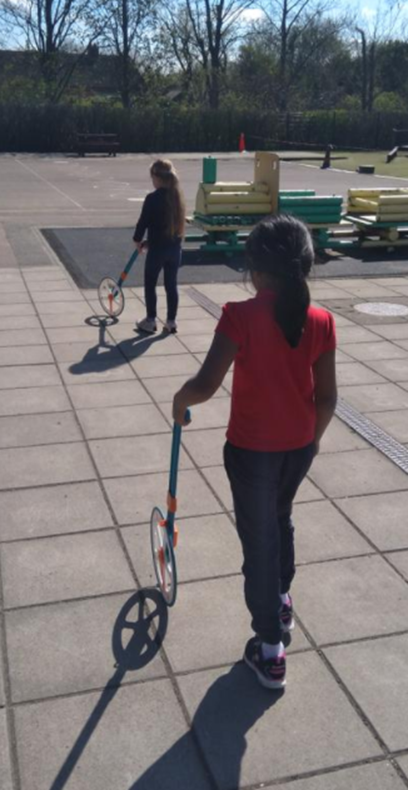
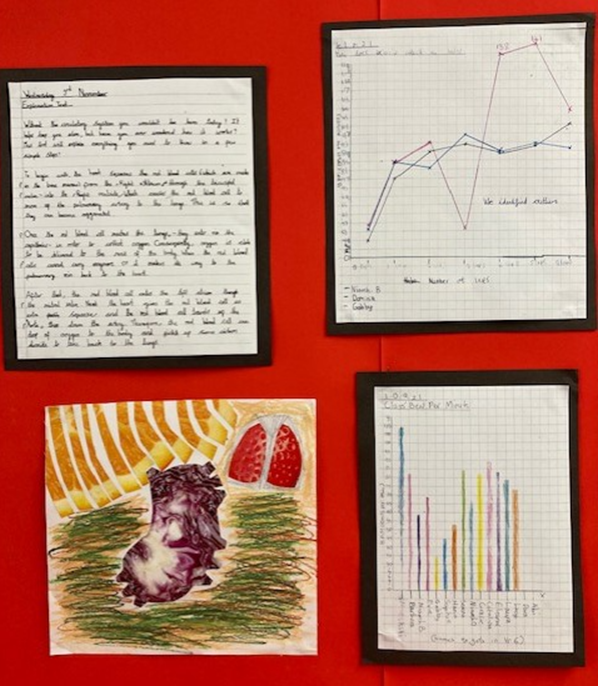
We also seek to make maths engaging, practical and relevant through the use of technology, outdoor learning and real-life applications. Our curriculum helps pupils recognise the connections between different areas of mathematics and understand how mathematical knowledge supports learning across the wider curriculum and everyday life.
Concrete, Pictorial and Abstract (CPA)
We use the Concrete–Pictorial–Abstract (CPA) approach to develop strong conceptual understanding.
Concrete
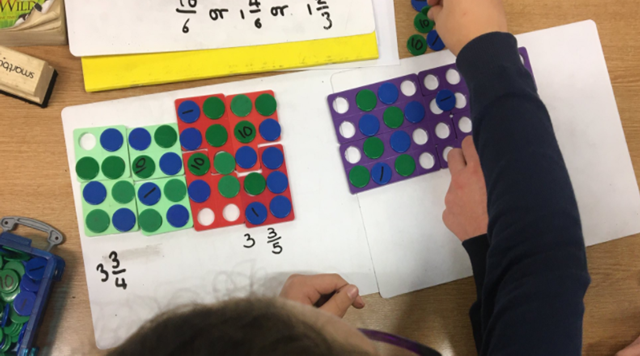
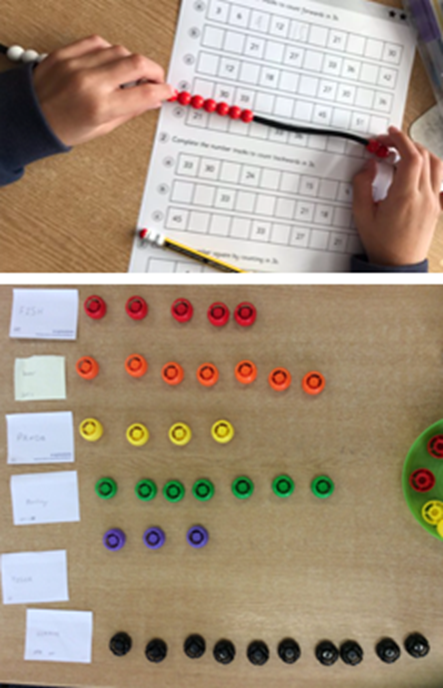
Children explore concepts using practical resources and manipulatives, enabling them to physically represent mathematical ideas.
Pictorial
Pupils then use drawings, diagrams, models and visual representations to bridge the gap between concrete experiences and abstract thinking.
Abstract
Once understanding is secure, children apply their knowledge using mathematical symbols, notation and formal written methods.
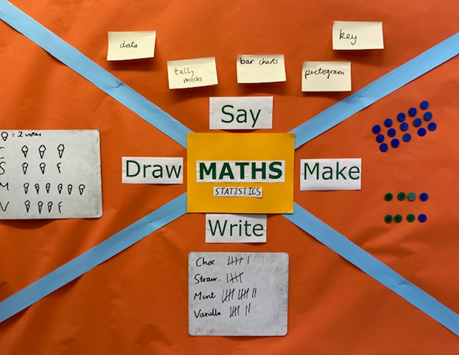
This progression helps pupils develop flexible understanding and confidence in representing mathematical ideas in multiple ways.
Inclusion
Mathematics at Caldecote is fully inclusive. We maintain high expectations for all learners and believe every child can achieve success when provided with appropriate support, challenge and opportunities.
Our mastery approach enables pupils to learn together while benefiting from carefully planned scaffolds, representations and targeted support. Ongoing assessment allows teachers to identify pupils who require additional teaching, pre-teaching or intervention so that misconceptions can be addressed promptly.
Pupils with SEND, EAL and other additional needs are supported through personalised provision, adaptive teaching and targeted interventions that enable them to access the same ambitious curriculum as their peers. At the same time, pupils who demonstrate secure understanding are challenged through rich reasoning, investigation and opportunities to deepen their thinking.
By valuing mistakes as an important part of learning, we foster confidence, resilience and independence in all learners.
Assessment
Assessment is embedded throughout our mathematics curriculum and informs teaching on a daily, weekly and termly basis.
Teachers continually assess pupils through questioning, observation, discussion and review of independent work. This ongoing assessment enables misconceptions to be identified quickly and informs immediate support, catch-up provision and future planning.
In addition to daily formative assessment, pupils complete termly assessments that help teachers monitor attainment, progress and understanding across the curriculum. Outcomes from these assessments, alongside teacher judgements, are used to identify strengths, address gaps in learning and ensure all pupils make strong progress from their starting points.
At the end of Year 2 and Year 6, pupils complete statutory assessments, including arithmetic and mathematical reasoning papers.
Parents are kept informed about their child's progress through parent consultations and annual reports, ensuring a shared understanding of achievement and next steps in learning.
Wider Opportunities in Mathematics
We aim to inspire a love of mathematics beyond the classroom through a range of enrichment opportunities. Pupils regularly participate in mathematical investigations, competitions, curriculum enrichment days and collaborative activities that promote problem-solving and teamwork.
The school takes part in events such as the UKMT Primary Maths Challenge and local maths competitions, providing opportunities for pupils to showcase their mathematical thinking and develop confidence in applying their skills in new contexts.
Through our mathematics curriculum, we aim to ensure that every child leaves Caldecote Primary School as a fluent, confident and independent mathematician, equipped with the knowledge, skills and curiosity needed for the next stage of their education and beyond.

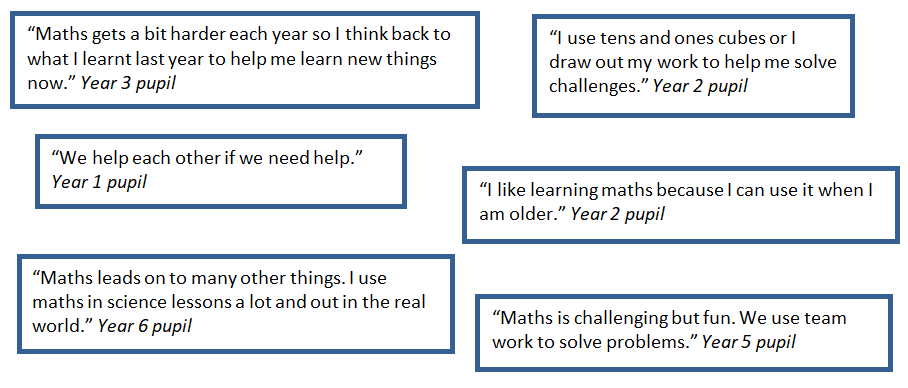
What do our pupils think?
How can you support your child with their maths learning at home?
Use the class overview to find out what your child is learning in maths each half-term.
The half-termly home learning menu will give you maths ideas and activities that are linked to your child’s learning in school.
When practising written methods please refer to our calculation strategies found here.
The calculation strategies document below explains how to use the calculation methods that your child will use to solve problems.
Mathletics is a learning programme your child can access to support the development and consolidation of their maths knowledge at home. All children in Year 1 to Year 6 have a Mathletics login.
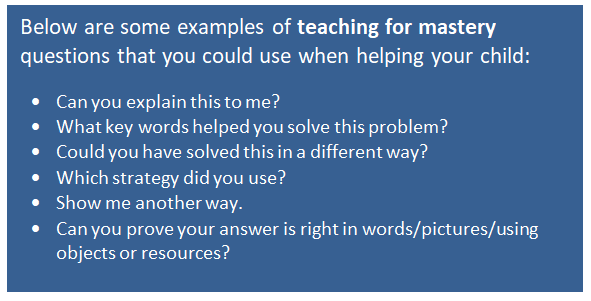
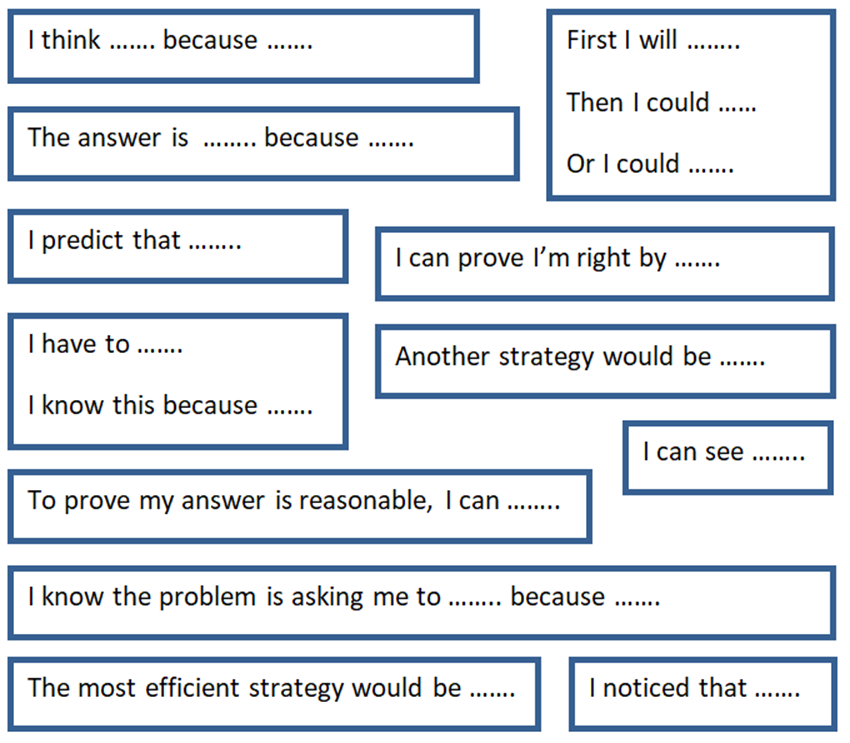
Here are some sentence stems for children to use. It is crucial that children are able to reason and explain their problem-solving or justify their thinking.